HOW TO USE SEA FOAM FOR ENGINE STORAGE AND STABILIZING FUEL
BENEFITS
DIRECTIONS
SUMMARY
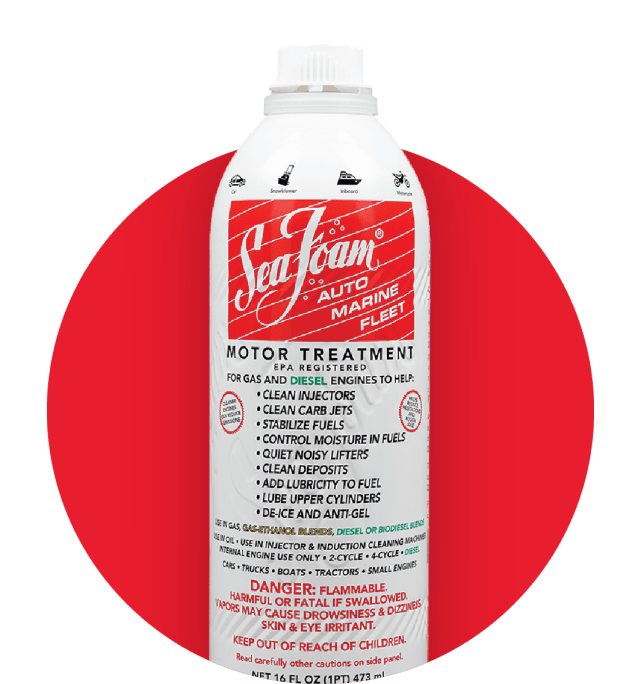
Sea Foam Motor Treatment works to stabilize stored fuel up to 2 years. Adding Sea Foam to stored tanks helps fuel resist evaporation, preserves ignition vapors, adds protective lubricity, and prevents the formation of gum and varnish in fuel systems. Gum and varnish residues are the most common cause of poor engine function. Using Sea Foam in stored fuel will help your engines start easier and last longer.

what is a fuel stabilizer and what does it do?
RELATED QUESTIONS
Should I siphon my gas that has been in my boat for a year? It is ethanol free gas and has sit during a medical rehab! It runs my 250 hp Mercury pro XS.
Hi Dennis,
Thanks for the question!
Best practice would be to drain the fuel.
After one year though, it should still start and run fine. If you don’t drain it, I’d wait until you have 2-4 gallons, add an entire can of Marine PRO, and run it for at least 20 minutes (just don’t run out of fuel). The high concentration will do a good job cleaning up any gum and varnish that formed while the fuel sat. After that, add 1 ounce of Marine PRO per gallon to every tank of fuel. That will prevent gum and varnish from forming going forward.
Can I use Sea Foam to clean the inside of a varnished gas tank?
Good question, Rob.
Yes, you can use a mixture of Sea Foam Motor Treatment (or High Mileage) and fresh fuel at a ratio of 50/50. That ratio will be plenty strong to clean. Pour the mixture in the tank, and let it sit for 24-48 hours. Make sure it’s filled above the “contamination line.” Periodically, move the fuel tank around to get the mixture of Sea Foam and gas moving. It is best if you can get a little heat inside the tank, so leave it outside as long as you can in direct sunlight if that’s an option. Sea Foam works better at higher temperatures. Dispose of the fuel/Sea Foam mix once finished.
If you have small engine and want to clean that up at the same time, here’s what I’d try:
Add a can of Sea Foam followed by a gallon of fresh fuel. Start and run the engine for 8 minutes to allow the Sea Foam concentration to draw through the carburetor circuits. Shut off the engine and let the engine sit over night or longer (2 to 3 days is better). After the long cleaning soak, add another gallon of fresh gas and run the engine for 5 to 8 minutes to heat up. Then take it for a short spin to create more upper engine heat and compression. Much of the Sea Foam will remain in the tank and continue to clean as you go. At that point the fuel system and fuel passageways should be very clean!
After that, run a cleaning dose of Sea Foam Motor Treatment to a low tank of fuel (full can in 2-3 gallons of fuel, or the equivalent ratio), and drive till almost empty before refilling. The high concentration will help clean out any varnish in the rest of the fuel system.
How much Sea Foam should I put per gallon of gas for lawn mower and weed eater equipment?
Thanks for the question!
It depends on what you’re trying to do. Here are a few good guidelines for small engines like a lawn mower or weed eater:
For regular use/preventative maintenance:
- Add 2 ounces of Sea Foam per gallon of fuel.
This helps keep the carburetor and fuel system clean and prevents gum and varnish from forming.
For cleaning (which is one of the best ways to use a can of Sea Foam):
Use a higher concentration. Here’s what I’d do:
- Add a strong mix (up to about a 1:2 ratio of Sea Foam to fuel)
- Run the engine for a few minutes to pull the treated fuel into the carburetor
- Shut it off and let it sit overnigh
- Run it again the next day
The high concentration works better and faster to clean out varnish, which is the #1 cause of rough running in small engines.
For storage:
- Add 2 ounces per gallon before storing.
This helps stabilize the fuel and prevents gum and varnish from forming while it sits.
No need to be exact with measurements. Sea Foam is petroleum-based and safe to use in higher concentrations.
How much Sea Foam Motor Treatment should I add in a scooter that did not drive for 10 years ?
Good question, Olivier. You’ll want to add a strong cleaning concentration to take care of any fuel gum and varnish in that has formed while it’s sitting.
Here’s what I’d recommend:
- Drain any old fuel completely
- Add fresh fuel mixed with a strong cleaning concentration of Sea Foam (up to about a 2:1 ratio of gas to Sea Foam for cleaning. 8 oz of gas and 4 oz of Sea Foam is a good amount for a scooter).
- Start and run the engine as best you can to draw the treated fuel into the carburetor. Let it idle for a few minutes.
- Let it soak overnight (or longer)
- Then start it up and take it for a ride. The Sea Foam will continue to clean as it burns through the treated fuel. Once it’s running and smoothed out, add fresh fuel. You can add 1 oz of Sea Foam per gallon of fuel in every tank if you like. That’ll help prevent gum and varnish from forming and keep it running strong.
Hope that helps and let me know if you have any other questions!
My dads truck has been sitting for about 6 yrs. Do I need to drain the old gas out before putting the Sea Foam in?
Thanks for the question.
With 6 year old fuel, I would go ahead and drain it before adding Sea Foam. Here’s an excerpt from our page on starting a car that’s been sitting for a long while:
Gummy varnish and deposits are a common cause of problems like rough idle, loss of power, or poor fuel efficiency in a car that’s been sitting. Adding a high concentration of Sea Foam Motor Treatment or Sea Foam High Mileage to the fuel tank is an easy way to clean fuel residues and deposits from the entire fuel system. If your engine has been sitting for a long time, here are three steps to get it cleaned up and running well again with Sea Foam:
- Start by draining or syphoning the old fuel from the tank.
- Add 2-3 gallons of fresh fuel and a can of Sea Foam High Mileage to the fuel tank. If you can’t drain all the fuel, you’ll still want to add some fresh fuel to bring back fuel volatility.
- Drive until almost empty (at least twenty miles if possible) before refueling with fresh fuel.
You can read the full article here: https://seafoamworks.com/starting-a-car-thats-been-sitting/
Let me know if you have any questions – happy to help!

Jim D.TECH
0