HOW TO USE SEA FOAM MOTOR TREATMENT IN FUEL
BENEFITS
applicationS
treatment recommendations
SUMMARY
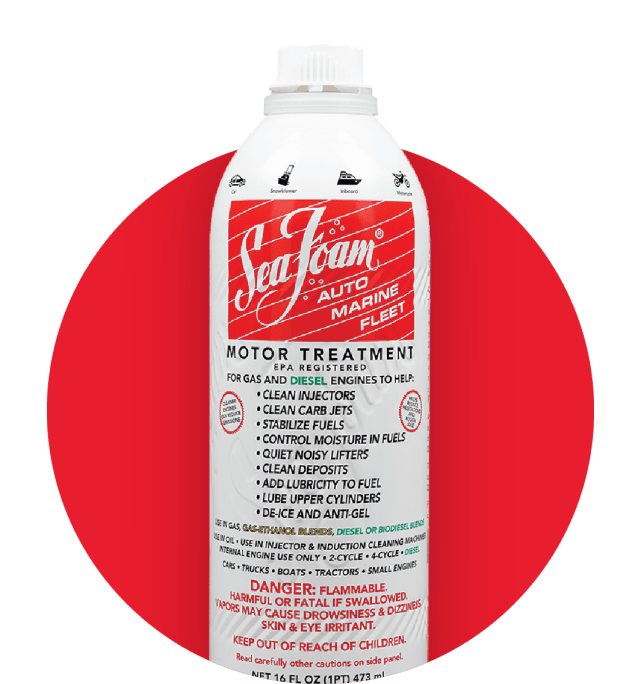
Pour Sea Foam in your fuel tank to clean and lubricate your entire fuel system. It works through fuel injectors and carburetors to remove harmful residues and deposits from fuel passageways, intake valves, pistons, and chamber areas.
For cleaning a gasoline or diesel fuel system, it’s safe to add more Sea Foam to fuel. In fact, the more Sea Foam you add to fuel, the better it cleans!
Made from petroleum ingredients, Sea Foam is safe and effective when used in all types of gasoline or diesel fuels and fuel blends. Sea Foam does NOT contain harsh detergent or abrasive chemicals that can harm your engine or fuel system components.

HOW TO USE a high concentration of SEA FOAM
mOTOR TREATMENT IN FUEL
RELATED QUESTIONS
I have a 5 gal tank with old gas and sludge. How can I clean it out?
Thanks for the question, Richard.
Yes, you can clean that out using a mixture of Sea Foam and fresh fuel. Sea Foam will help reliquefy the fuel gum/varnish/sludge and clean up the tank.
Here’s what I’d do:
- Mix Sea Foam Motor Treatment with fresh fuel at about a 50/50 ratio
- Pour the mixture into the tank and make sure it’s filled above the contamination line
- Let it sit for 24-48 hours
- Periodically move or slosh the tank to keep the mixture working
If you can, leave the tank in a warm area or direct sunlight. Sea Foam works better with heat and will clean faster.
Once you’re done, dispose of the Sea Foam/fuel mixture.
Can I use Sea Foam in my 2004 Hummer H2? And would I use 2 cans for its 32 gallon gas tank?
Hi Kevin,
Good question. Yes, you can use Sea Foam Motor Treatment in your vehicle. With that size tank, 2 cans in a low tank of fuel would do a good job cleaning. I like to wait until the tank is low (1/4 -1/8 tank), add both cans, and then drive for at least 10-20 miles before refueling. It’s safe to add a high concentration like that and it works very well for cleaning fuel residues and deposits. Add it to fuel like this every 3,000 miles or once a year.
You could also try High Mileage Motor Treatment. It’s made specifically for stubborn residues and deposits in higher-mileage vehicles. It’s a great cleaner!
I didn’t winterize my lawnmower. What should I do before spring?
Hi Angela,
Good question! While your lawn mower is probably just fine since it was just one winter, you can add a cleaning dose of Sea Foam to get it ready for spring. When a mower sits with fuel in it, the biggest issue is fuel gum and varnish forming in the carburetor. Sea Foam will clean it up and help make sure it runs well all summer.
Here’s what I’d do before you start using it this spring:
- If possible, drain the old fuel (or run it till almost empty)
- Add a cleaning dosage of Sea Foam to fresh gas (up to a 1:2 ratio of Sea Foam to gas. A 16 oz can of Sea Foam in ½-1 gallon of fuel would be convenient and a good starting point).
- Start the mower and let it run for a few minutes. That will draw the Sea Foam into the fuel system. As you run it this spring, the Sea Foam will continue to clean up any gum and varnish that formed while it was sitting, and prevent any more from forming.
For the rest of the season, keep using 1–2 ounces per gallon to help prevent any fuel-related issues. If you add it to every tank of gas it’ll go a long ways towards preventing problems.
I have a lawnmower (Honda) and snowblower (Ariens) that both have surging issues even though I run them dry at the end of the season. This happens mostly when they idle. I use fresh gas and Stabil but nothing works. Will Sea Foam help this issue?
How much Sea Foam should l put in a cargo van that has a full tank of gas? And has not been drove all winter?
Thanks for the question!
If the tank is already full, I’d add 1–2 ounces of Sea Foam per gallon of fuel.
That said, the best cleaning results come from using a higher concentration. Here’s what I’d do:
- Drive it until the tank is down to about 1/4 tank or less
- Add a full 16 oz can (or even 2 cans)
- Drive it 10–20 miles (or until nearly empty) before refueling
Fuel that sits can form gum and varnish, which is the #1 cause of rough running after storage. Sea Foam works to liquefy and clear that out to help your engine maintain or recover strong performance.

Jim D.TECH
0