HOW TO USE SEA FOAM MOTOR TREATMENT IN FUEL
BENEFITS
applicationS
treatment recommendations
SUMMARY
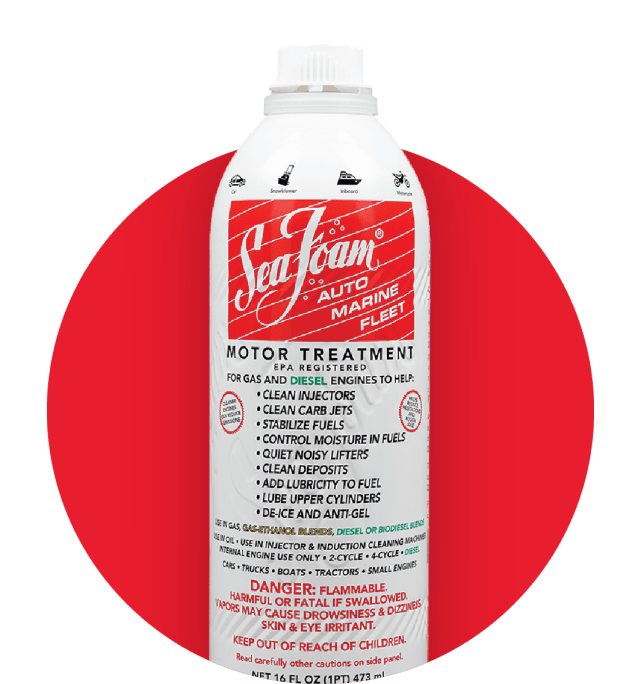
Pour Sea Foam in your fuel tank to clean and lubricate your entire fuel system. It works through fuel injectors and carburetors to remove harmful residues and deposits from fuel passageways, intake valves, pistons, and chamber areas.
For cleaning a gasoline or diesel fuel system, it’s safe to add more Sea Foam to fuel. In fact, the more Sea Foam you add to fuel, the better it cleans!
Made from petroleum ingredients, Sea Foam is safe and effective when used in all types of gasoline or diesel fuels and fuel blends. Sea Foam does NOT contain harsh detergent or abrasive chemicals that can harm your engine or fuel system components.

HOW TO USE a high concentration of SEA FOAM
mOTOR TREATMENT IN FUEL
RELATED QUESTIONS
Can I use Sea Foam in my 2015 GRAND CHEROKEE OVERLAND with high mileage-3.6L V6 engine / DOHC 24V
thank you so much!
Thanks for the question, Terry!
Yes, you can use Sea Foam Motor Treatment in your Jeep. It’s compatible with any gas or diesel engine. Just follow the instructions on the can.
Here’s a little more info on how to use it:
- Sea Foam Motor Treatment in fuel. I like to wait until the tank is low (1/4 -1/8 tank), add the whole 16 oz can, and then drive for at least 10-20 miles before refueling. It’s safe to add a high concentration like that and it works very well for cleaning fuel residues and deposits. Add it to fuel like this every 3,000 miles or once a year.
- Sea Foam Motor Treatment in oil. Add 1 ounce of Sea Foam per quart of oil in the crankcase. We recommend adding it 100-300 miles before your next oil change. That gives the Sea Foam enough time to circulate and clean, and it allows all the reliquefied oil residues to be drained away with the old oil. To help progressively clean up your oil crankcase, add it before every oil change.
Hope that helps and let me know if there’s anything else!
Does Sea Foam neutralize ethanol?
Good question, Art. We get asked a lot about ethanol.
No, Sea Foam does not neutralize ethanol.
What it does do is help stabilize fuel and help protect against the harmful effects that can occur as ethanol-blended fuel ages, such as gum and varnish formation. It also works to clean fuel residues and deposits that can affect engine performance.
If you’re storing equipment with ethanol-blended fuel, add 1 ounce of Sea Foam per gallon of fuel before storage and run the engine for a few minutes so the treated fuel circulates throughout the fuel system.
Can I use Sea Foam in my 2005 Chevy Impala?
Hi Rhonda,
Thanks for the question!
Yes, you can absolutely use Sea Foam Motor Treatment in your 2005 Chevy Impala. It’s safe and effective for that vehicle. Just follow the directions on the can.
Here’s what I’d do to get the most cleaning power:
- In the fuel: Wait until the tank is low (about 1/4 tank or less), add the full 16 oz can, and then drive at least 10–20 miles (or until nearly empty) before refueling. The higher concentration works much better and faster to clean fuel residues and deposits.
- In the oil: Add 1 oz of Sea Foam per quart of oil 100–300 miles before your next oil change. This helps clean oil residues and deposits so they can be drained away with the old oil.
Sea Foam is a great preventative maintenance product and can also help if you’re experiencing issues related to fuel gum and varnish.
Have some unopened Seafoam from around 14 years ago. This is left from previous diesel truck. Now have 2023 diesel and want to use Sea Foam in it. What is the shelf life?
How much Sea Foam do I add to my push mower gas tank to get it going?
Thanks for the question, Theresa.
Fuel gum and varnish is the #1 cause of engine problems in a small engine like a lawn mower. Cleaning the fuel system with Sea Foam is a good place to start. You’ll want to use a high concentration of Sea Foam Motor Treatment. Drain the old fuel if possible, then mix Sea Foam with fresh gasoline at up to a 1:2 ratio (1 part Sea Foam to 2 parts fuel). Start or crank the engine long enough to draw the mixture into the carburetor, then let it soak overnight—or up to 48–72 hours for severe deposits. The high concentration works much better and faster to dissolve the fuel gum and varnish that clog carburetor passages and jets.

Jim D.TECH
0